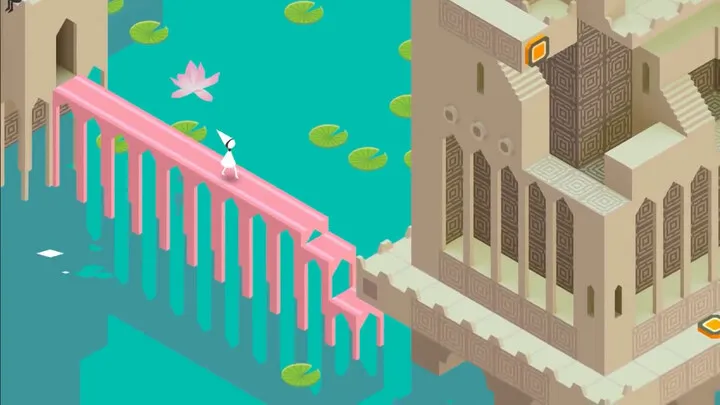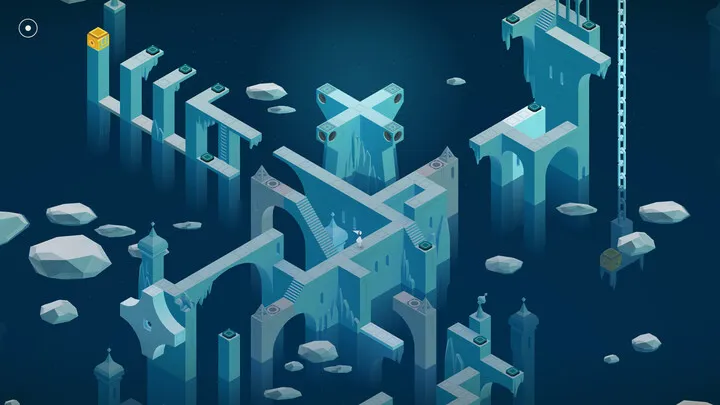


In Monument Valley, players are not simply solving puzzles—they are learning an entirely new way to see space. Unlike traditional puzzle games that rely on logic or pattern recognition alone, Monument Valley challenges your perception itself. Paths exist only when viewed correctly, structures transform depending on perspective, and solutions often feel impossible until they suddenly become obvious.
Because of this unique design, many players struggle—not because the puzzles are too hard, but because they approach them with the wrong mindset. This guide focuses deeply on how to think, observe, and interact with Monument Valley’s world, progressing from early fundamentals to advanced illusion mastery. By the end, you’ll understand not just how to solve puzzles, but how to “read” the game’s architectural language.

Understanding the Core Rule: Perspective Creates Reality
Why Traditional Logic Fails
Most puzzle games reward logical deduction. Monument Valley, however, rewards perceptual flexibility. What you see is not always what exists—and more importantly, what exists can change based on how you look at it.
Many beginners make the mistake of assuming:
- Paths must physically connect
- Height differences matter realistically
- Structures obey gravity
In Monument Valley, none of these assumptions are reliable.
The First Mental Shift
To succeed, adopt this rule early:
- If two paths visually align, they are connected—even if impossible
- If a structure rotates, its logic resets
- Perspective overrides physical rules
This shift is the foundation of every puzzle solution in the game.
Learning to Rotate Structures With Purpose
Rotation Is Not Random
Early levels introduce rotating platforms and towers. Many players spin them randomly until something works—but this approach becomes inefficient later.
Instead, treat rotation as a deliberate alignment tool.
Before rotating:
- Identify your goal position
- Observe which segments could connect
- Rotate slowly and watch alignment points
Recognizing Alignment Moments
Key signs that a rotation is correct:
- Paths visually overlap perfectly
- Edges line up cleanly
- Ida can step forward without interruption
Once you recognize these visual cues, rotations become predictable rather than experimental.
Identifying Hidden Paths Through Visual Tricks
The Illusion of Broken Paths
One of the most common puzzle types involves paths that appear disconnected but can be aligned through perspective.
These are not hidden—they are misleadingly visible.

Look for:
- Platforms that nearly touch
- Angles where lines overlap
- Corners that suggest possible connection
Training Your Eyes
To improve at spotting hidden paths:
- Move the camera slightly before acting
- Observe from multiple angles
- Focus on edges rather than surfaces
Over time, you will begin seeing connections instantly.
Using Color and Lighting as Guidance Systems
The Game’s Silent Hint System
Monument Valley rarely gives explicit instructions, but it constantly guides you through visual design.
Color and lighting often indicate:
- Interactive elements
- Active pathways
- Puzzle relevance
How to Interpret Visual Signals
Pay attention to:
- Brightly colored objects (often movable or important)
- Glowing paths (indicating valid routes)
- Shadowed areas (usually non-interactive)
These subtle cues reduce trial-and-error and speed up puzzle solving.
Mastering Multi-Layered Puzzles
Understanding Layered Spaces
As the game progresses, puzzles begin involving multiple layers—foreground, background, and hidden connections.
Players often fail because they focus on only one layer at a time.
Breaking Down Complexity
To solve multi-layered puzzles:
- Identify all visible paths
- Separate layers mentally
- Look for cross-layer alignments
Strategy Checklist
- Do not rush movement
- Observe entire structure before acting
- Solve one connection at a time
Layered puzzles reward patience and observation.
Controlling Moving Platforms and Timing
Dynamic Puzzle Elements
Some levels introduce moving platforms that require timing rather than just alignment.
These sections test coordination between:
- Rotation
- Movement
- Timing
Timing Techniques
To succeed:
- Watch platform cycles before acting
- Move only when alignment is stable
- Avoid rushing transitions
Patience is more important than speed in these sections.
Solving Totem-Based Cooperative Puzzles
Understanding Dual Character Mechanics
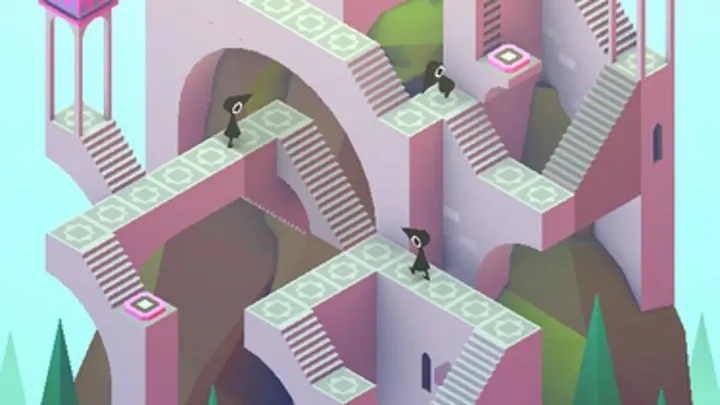
When the Totem appears, puzzles become more complex because you must manage two entities within the same space.
Each character depends on the other for progression.
Coordinating Movement
Effective strategies include:
- Positioning one character before moving the other
- Creating stable paths for both
- Avoiding unnecessary resets
Key Principles
- Think in sequences, not actions
- Always plan both characters’ routes
- Maintain awareness of both positions
These puzzles require foresight rather than reaction.
Navigating Impossible Staircases and Loops
Accepting Non-Euclidean Geometry
Some of the most confusing puzzles involve staircases that loop or connect in impossible ways.
The mistake players make is trying to understand them logically.
Practical Approach
Instead of analyzing structure:
- Focus on visible connections
- Ignore spatial consistency
- Follow what works, not what makes sense
Mental Shortcut
If it looks connected, it is connected—no matter how impossible it seems.
Late-Game Puzzle Solving: Pattern Recognition
Recognizing Repeated Mechanics
By the later stages, the game begins reusing earlier mechanics in more complex forms.
Players who recognize patterns solve puzzles much faster.
Common late-game patterns:
- Rotating towers with hidden connections
- Multi-layer path alignment
- Combined movement + rotation challenges
Building Intuition
At this stage:
- Trust your experience
- Identify puzzle type quickly
- Apply known solutions creatively
The game rewards accumulated knowledge.
Achieving Puzzle Flow and Mental Clarity
Entering the “Flow State”
The best Monument Valley experience happens when puzzles feel intuitive rather than difficult.
To reach this state:
- Slow down your thinking
- Avoid overanalyzing
- Let patterns emerge naturally
Avoiding Frustration
If stuck:
- Step away briefly
- Reset your perspective
- Re-examine the structure calmly
Clarity often comes from distance, not effort.
Conclusion
Monument Valley is not just a puzzle game—it is a lesson in perception. Mastery comes not from memorizing solutions, but from learning how to see differently. By understanding perspective-based logic, recognizing visual cues, and approaching puzzles with patience and flexibility, players can transform confusion into clarity.
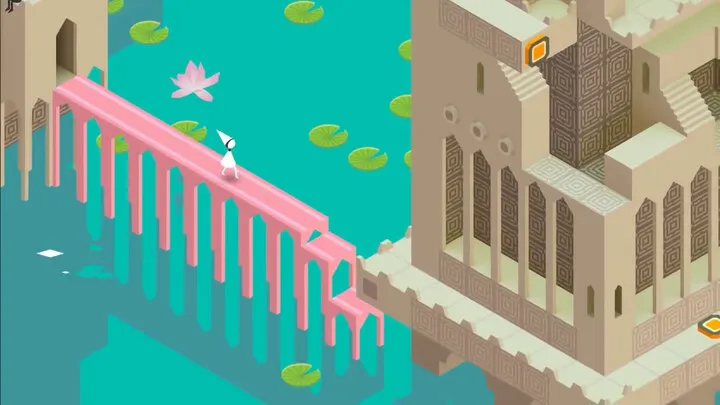
Each level teaches a new way of thinking, gradually building a mental toolkit that allows players to navigate even the most complex illusions. In the end, success is not about solving puzzles quickly—it is about understanding the language of impossible geometry and letting it guide you forward.