.webp) gametestedpro.com
gametestedpro.comForza Horizon 6: How to Fix Understeer and Build a Faster Road-Racing Car
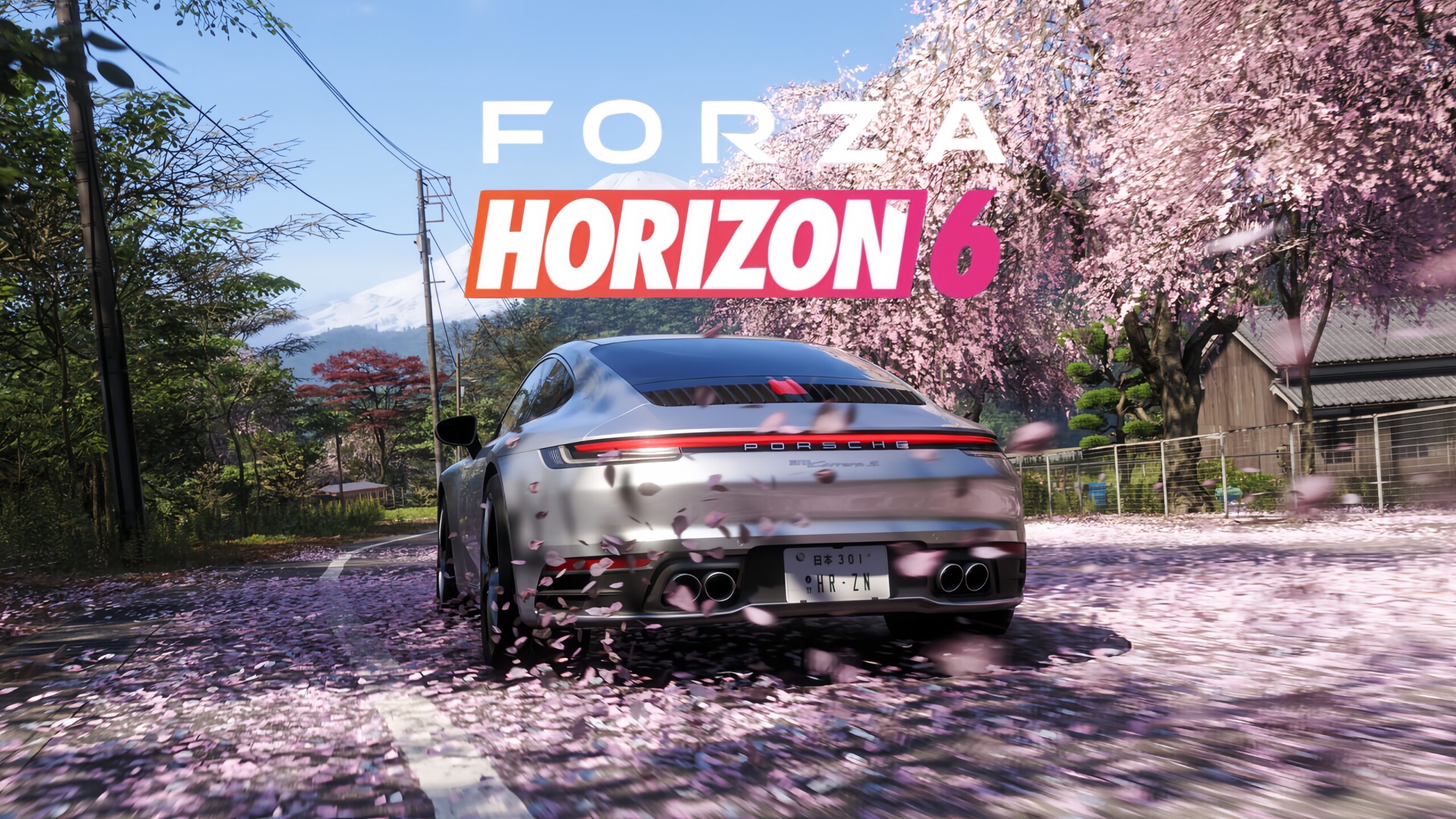
Forza Horizon 6 gives players an enormous selection of cars and a deep upgrade system, but having more horsepower does not automatically make a car faster around a technical road course. One of the most common problems is understeer: you turn the wheel, but the front tires refuse to follow the intended line, forcing you to slow down or run wide through the corner.
This problem becomes particularly important in Japan because Forza Horizon 6 places considerable emphasis on technical mountain roads, city streets, touge battles, and circuits. Playground Games has also introduced a new R class for track-focused cars and expanded the game's road-racing environment across Japan, making handling and setup choices especially important for players who want consistent lap times.
Rather than covering every tuning option superficially, this guide focuses on one specific issue: how to diagnose and eliminate front-end understeer in a road-racing build. The goal is not to give you one magical tune that works on every car. Instead, you will learn how to identify where the problem begins, choose the right upgrades, adjust alignment and suspension, balance the differential, and test each change without destroying the car's overall behavior.
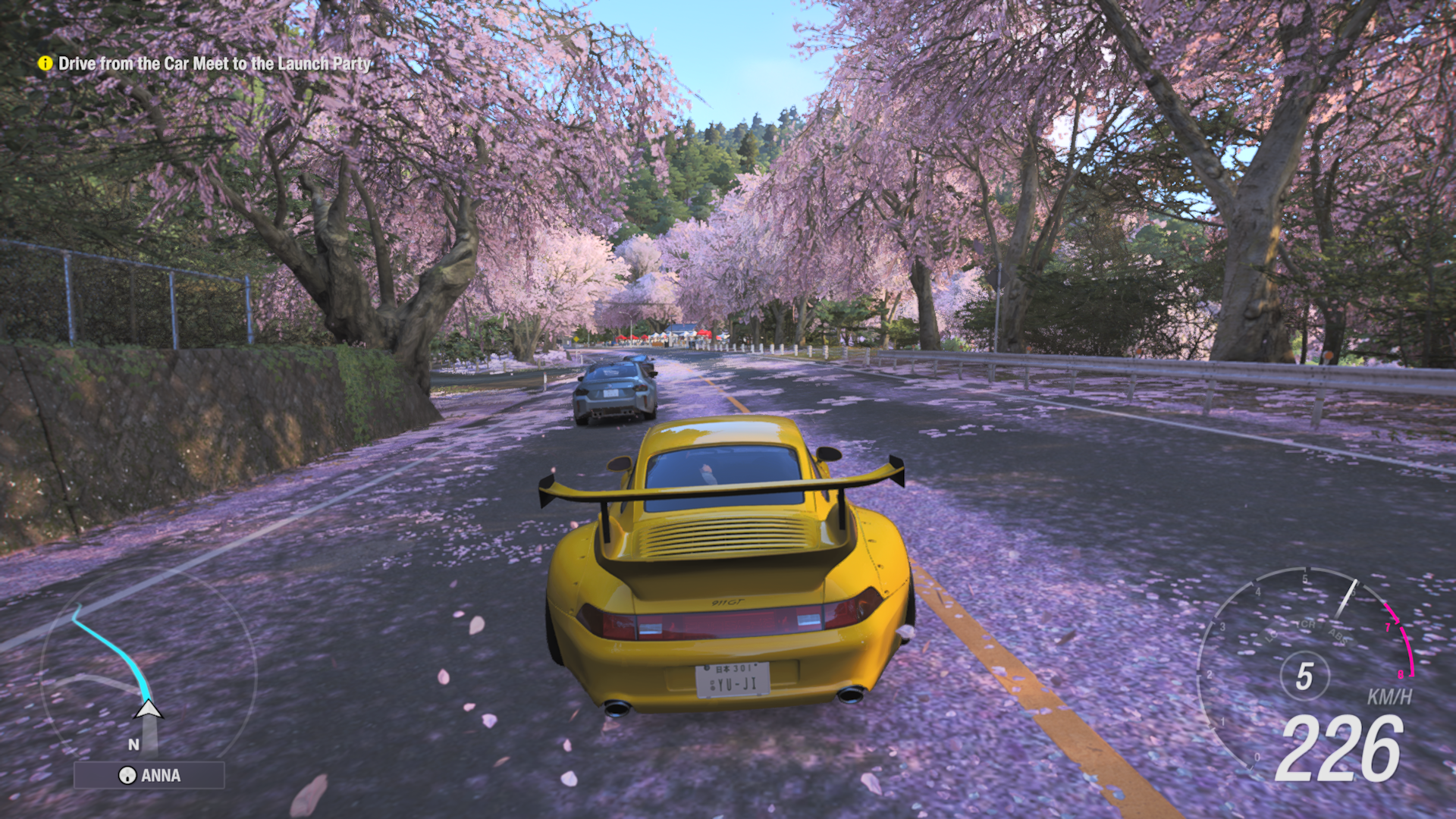
1. Identify Exactly When Your Car Understeers
Before changing a single tuning slider, you need to determine when the car actually loses front grip. "The car understeers" is not specific enough because different forms of understeer require completely different solutions.
If the car refuses to turn while you are braking and entering a corner, you have entry understeer. If it initially turns but begins pushing wide when you apply throttle, you have exit understeer. If the front tires gradually lose grip through the middle of a long corner even while you maintain a steady throttle, that is mid-corner understeer.
Use a three-phase corner test
Find a road-racing circuit with a combination of slow, medium, and high-speed corners. Run several clean laps without changing your setup. Pay attention to the exact moment the car stops following your steering input.
Break every corner into three phases:
- Entry: braking and initial steering
- Apex: steady-state cornering
- Exit: throttle application and acceleration
If the front pushes wide before you touch the throttle, changing the differential will probably not solve the primary problem. If the car turns well until you accelerate, the issue may instead be power delivery, differential lock, or insufficient rear traction.
This diagnostic step is important because tuning blindly can create a slower car. A setting that fixes one phase of the corner can easily damage another.
2. Build the Car Around Grip Before Adding More Power
A common mistake in Forza Horizon 6 is spending Performance Index on engine upgrades before establishing a stable chassis. A powerful engine can make a poorly balanced car more difficult to control, especially when the additional power exceeds the available tire grip.
For a road-racing build, start with the parts that determine how effectively the car can use its power. Current FH6 tuning references consistently place tires, handling components, drivetrain tuning, and weight reduction ahead of adding large amounts of engine power.
Upgrade in a controlled order
A useful order for a dedicated road build is:
- Choose the appropriate tire compound.
- Increase tire width where the PI budget allows.
- Reduce weight.
- Install adjustable suspension.
- Install adjustable anti-roll bars.
- Add an adjustable differential.
- Upgrade brakes.
- Add aero when appropriate.
- Add power only after the chassis is predictable.
- Fine-tune the gearing to match the circuit.
This order prevents a common problem: building a car with enormous horsepower and then attempting to make the suspension compensate for it.
Don't automatically install every maximum upgrade
More grip is useful, but every upgrade consumes PI. If adding a more aggressive tire compound forces you to remove weight reduction or makes the car enter a less competitive class, the overall build may actually become slower.
The objective is not to maximize every individual statistic. The objective is to create a car that can carry speed consistently through the entire corner.
3. Fix Front-Tire Grip Before Touching the Suspension
Tires are the foundation of the entire setup because they are the connection between the car and the road. If the front tires simply do not have enough grip, suspension adjustments can only compensate for the problem rather than solve it.
Tire compound, width, and pressure all influence how the car behaves. FH6 tuning references identify tires as one of the most important parts of the tuning process, while lower pressure generally increases the available contact patch at the expense of steering response.
Start with pressure, not extreme alignment
If the front of the car feels nervous or unresponsive, do not immediately apply aggressive camber or toe. Start with a reasonable pressure baseline and test the car under the same conditions.
If reducing front pressure produces noticeably better cornering without making the steering feel excessively slow, you have evidence that the front axle needed more mechanical grip. If the car becomes vague or rolls onto the outside shoulder too heavily, you have pushed the adjustment too far.
The important principle is small changes followed by testing. A current FH6 tuning guide recommends changing one parameter at a time and running several laps before judging the result.
Give the front axle enough tire
If your PI budget permits it, additional front tire width can be extremely useful on a car suffering from persistent understeer. This is particularly valuable on heavy front-engine cars that place substantial load on the front axle during cornering.
However, do not treat wider front tires as a replacement for proper weight balance. If the rear axle becomes dramatically less capable than the front, you can create an unstable car that suddenly rotates when you lift the throttle.
4. Use Camber to Keep the Front Tires Working in Corners
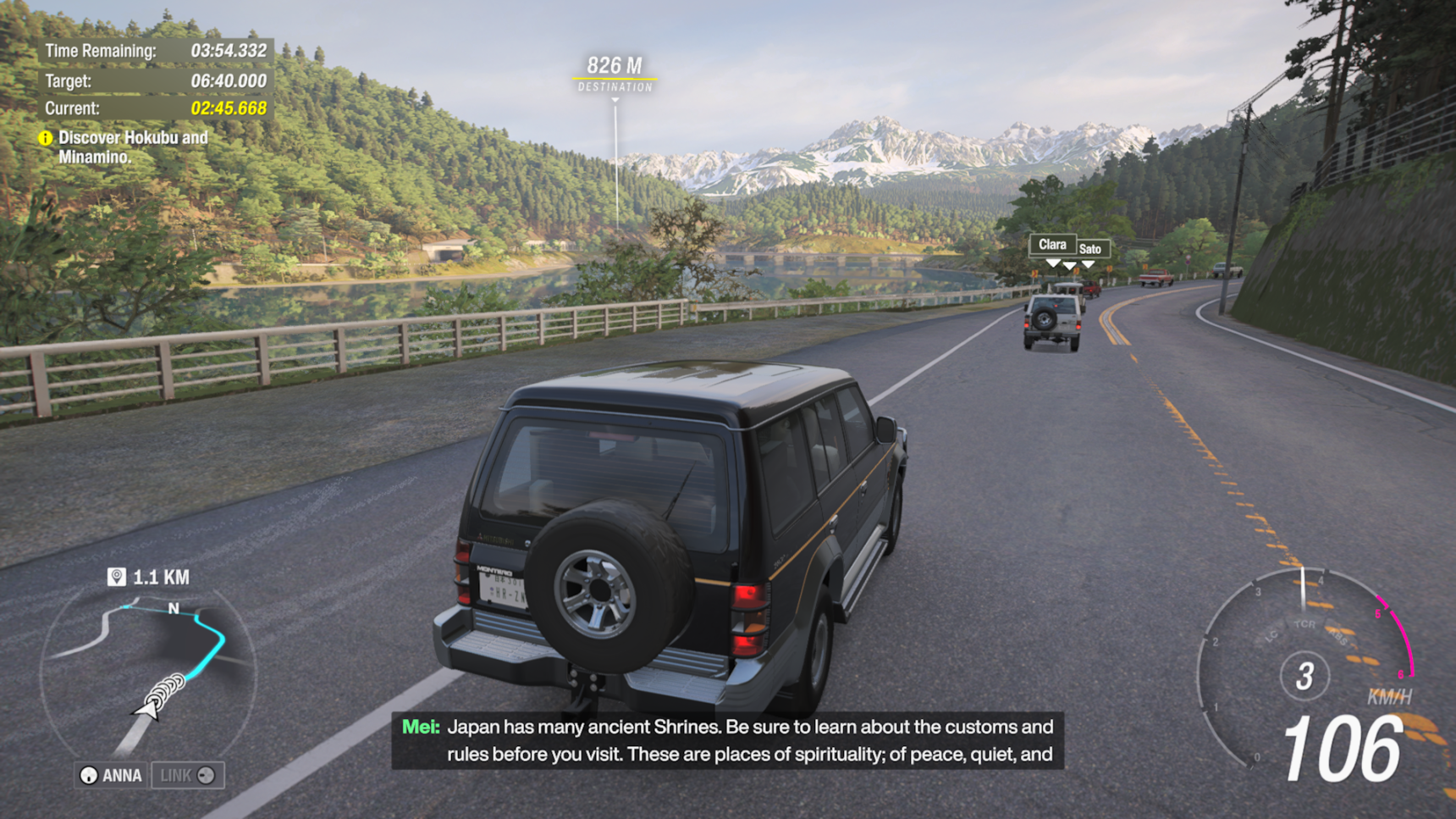
Once your tire choice and pressure are sensible, alignment becomes the next major area to investigate. Camber determines how the tire sits relative to the road as the suspension compresses during cornering.
A completely flat tire at rest does not necessarily remain flat against the road when the car rolls into a corner. Negative camber can help maintain useful tire contact during cornering, which is why road-racing setups commonly use some negative camber on the front axle. Current FH6 tuning references commonly start around negative 1.5 degrees or more at the front, although exact values vary by vehicle and setup.
Start moderately
Do not assume that more negative camber automatically equals more grip. Excessive camber can reduce braking performance or make the tire less effective outside of the cornering conditions you are trying to optimize.
A practical starting point for a road car is moderate negative front camber. Test the car through several medium-speed corners, then compare:
- Initial turn-in
- Mid-corner grip
- Braking stability
- Straight-line behavior
- Exit traction
If the car turns better but becomes unstable under braking, the alignment may have moved too far toward cornering performance.
Use the rear axle to control balance
Rear camber should not be chosen independently from the front. If the rear has substantially more cornering grip than the front, the car may remain heavily biased toward understeer.
Conversely, removing too much rear grip can make the car rotate aggressively during lift-off or braking. Your goal is not to make the rear tires as loose as possible. Your goal is to give the front enough authority to turn the car while keeping the rear predictable.
5. Balance the Anti-Roll Bars Instead of Making Everything Stiff
Anti-roll bars are one of the most useful tools for correcting handling balance. They influence how strongly the suspension resists independent wheel movement across an axle, which makes them particularly useful when deciding whether the car should rotate more readily or remain stable.
For a car with persistent front-end understeer, reducing front roll stiffness or increasing rear roll stiffness can generally encourage more rotation. However, blindly making the rear extremely stiff can create a car that feels fast for one corner and uncontrollable everywhere else.
Adjust the front-to-rear relationship
Think of anti-roll bars as a balance tool rather than a simple "stiffer is faster" setting.
If the front of the car washes wide:
- Try slightly reducing front anti-roll bar stiffness.
- Test the same corner again.
- If necessary, add a small amount of rear stiffness.
- Stop when the car begins rotating naturally.
Current FH6 tuning references emphasize that suspension and anti-roll-bar settings should be treated as a starting point rather than universal numbers because each vehicle reacts differently.
Avoid creating snap oversteer
If you solve understeer by making the rear extremely stiff, you may simply replace one problem with another. The car might rotate beautifully during slow corners but suddenly lose rear stability when you lift the throttle or hit an uneven surface.
A competitive setup should be predictable. A car that is slightly slower at its theoretical limit but gives you confidence on every lap can produce better race results than an aggressive tune that requires constant correction.
6. Tune Springs and Ride Height for Corner Stability
Springs control how the car responds to weight transfer, while ride height affects the car's overall stance and available suspension travel. These settings become particularly important when your understeer is connected to excessive body movement rather than a simple lack of tire grip.
For road racing, lower ride height and relatively firm suspension are common starting points, but the correct values depend heavily on the vehicle, track surface, and class. FH6 tuning references consistently recommend different suspension directions for road racing, dirt, drift, and other disciplines, reinforcing the importance of tuning for the event rather than using one universal setup.
Watch what happens during braking
If the front of the car dives heavily under braking, the suspension is experiencing substantial weight transfer toward the front axle. Some front loading is useful because it increases front tire grip, but excessive movement can make the car difficult to control when you transition from braking to steering.
Instead of simply making the front springs extremely stiff, test smaller adjustments. The car should remain composed when you brake in a straight line and then transition into the corner.
Don't slam the car to the ground
A very low ride height can look appealing in a road-racing build, but excessive lowering can compromise the car when it encounters bumps, curbs, elevation changes, or aggressive weight transfer.
Japan's road environment makes this particularly relevant. Mountain roads and technical routes reward a car that remains stable across changing surfaces rather than one optimized exclusively for a perfectly smooth circuit.
7. Control Entry Understeer With Brakes and Differential Settings
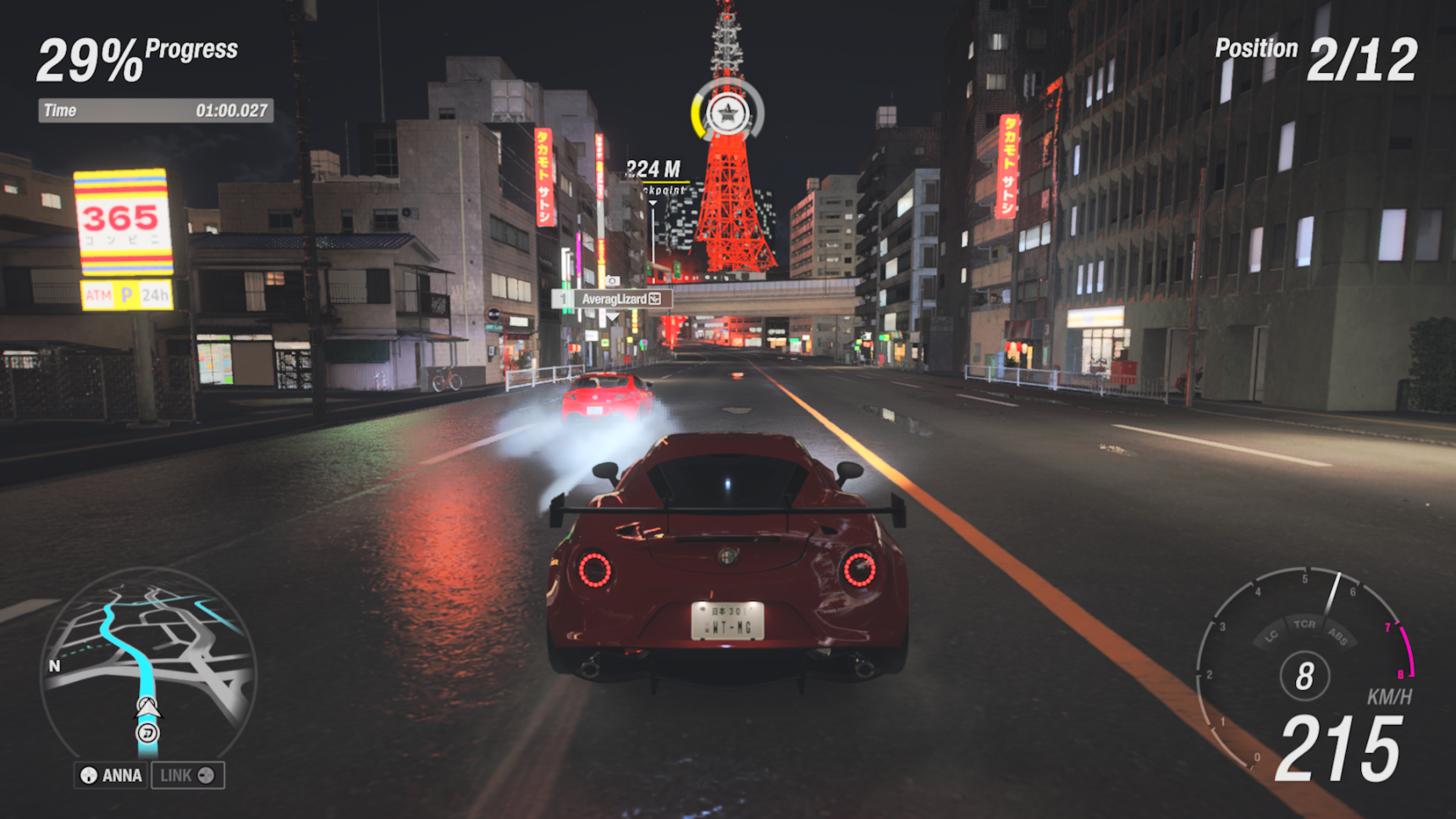
If your car understeers specifically when entering corners, the differential may not be the first setting you should change. Braking technique and brake balance can have a major influence on whether the front tires are available for steering.
Too much front braking can make the front tires heavily loaded and saturated while you are simultaneously asking them to turn. Too much rear braking can make the rear unstable. FH6 tuning references generally recommend starting with a forward brake bias and adjusting carefully according to stability and rotation.
Separate braking problems from steering problems
Try entering the same corner using three different approaches:
- Brake earlier and finish most braking before turning.
- Brake later but release the brake more smoothly.
- Apply light trail braking into the initial part of the corner.
If the car suddenly turns better when you release the brake earlier, the problem may be driving technique rather than suspension tuning.
This distinction is extremely important. A setup cannot completely compensate for asking the front tires to brake at maximum capacity while also demanding maximum steering force.
Tune differential lock carefully
The differential becomes particularly important when acceleration is involved. Excessive acceleration lock can make the car resist rotation under power, while insufficient lock can create traction problems.
For AWD cars, front/rear torque distribution is especially important. Current FH6 tuning references recommend using the differential to influence how much the car rotates and how effectively it puts power down, with rear-biased AWD setups often helping rotation compared with excessive front bias.
Do not use the differential as a universal solution to mid-corner understeer. If the car pushes before throttle application, solve the mechanical balance first.
8. Fix Exit Understeer Without Destroying Traction
Exit understeer is different from entry understeer because it appears when you begin accelerating. You may have a car that turns beautifully at the apex but immediately starts running wide once power is applied.
This is particularly common in powerful AWD cars and front-heavy vehicles. When you accelerate, the chassis transfers load toward the rear while the driven tires attempt to transmit engine torque. If the front axle is being asked to both steer and deliver substantial power, it can lose the ability to maintain the intended line.
Reduce the conflict between steering and acceleration
The simplest driving solution is progressive throttle application. Do not treat the throttle like an on/off switch. Begin applying power as you straighten the steering wheel, then increase throttle as the car exits the corner.
If the setup itself is responsible, investigate differential distribution and acceleration lock. A current FH6 tuning reference specifically recommends adjusting AWD differential balance toward the rear to encourage rotation and improve the car's ability to drive out of corners.
Use gearing to make power manageable
Sometimes the problem is not that the engine has too much power overall, but that the gear you are using delivers too much torque at corner exit.
If second gear produces an enormous burst of wheelspin while third gear feels too slow, adjusting the final drive or individual ratios may create a more usable power band. Shorter gearing can improve acceleration but may also make traction harder to manage, while longer gearing can calm power delivery.
For technical Japanese roads, shorter gearing can be useful because many corners occur below maximum-speed conditions.
9. Add Aero Only After Mechanical Grip Is Under Control
Aerodynamics can significantly change how a road car behaves at speed, but it should not be your first solution to basic understeer. Downforce is speed-dependent, meaning an aero adjustment that helps through a fast corner may have little effect in a slow hairpin.
For road racing, additional downforce can increase high-speed cornering grip, while reducing aero can improve straight-line speed. FH6 tuning references recommend high downforce for technical circuit work and lower downforce when top speed is more important.
Match aero to the circuit
If your car is stable through slow corners but suddenly pushes wide in fast sweepers, aero becomes much more relevant. Increasing front downforce can give the front axle additional authority at speed.
However, adding a large amount of front aero without considering the rear can create a dangerous imbalance. The car needs enough rear stability to remain predictable during high-speed direction changes.
Don't sacrifice the whole race for one corner
If adding maximum downforce makes the car fantastic in a high-speed section but costs significant speed on every straight, your total lap time may become worse.
A useful approach is to identify where the car loses the most time. If you are losing seconds through slow corners, mechanical grip and braking are more important. If you are already strong in slow corners but lose time in high-speed sweepers, aero becomes a stronger candidate.
10. Test the Tune Like a Driver, Not Like a Slider Collector
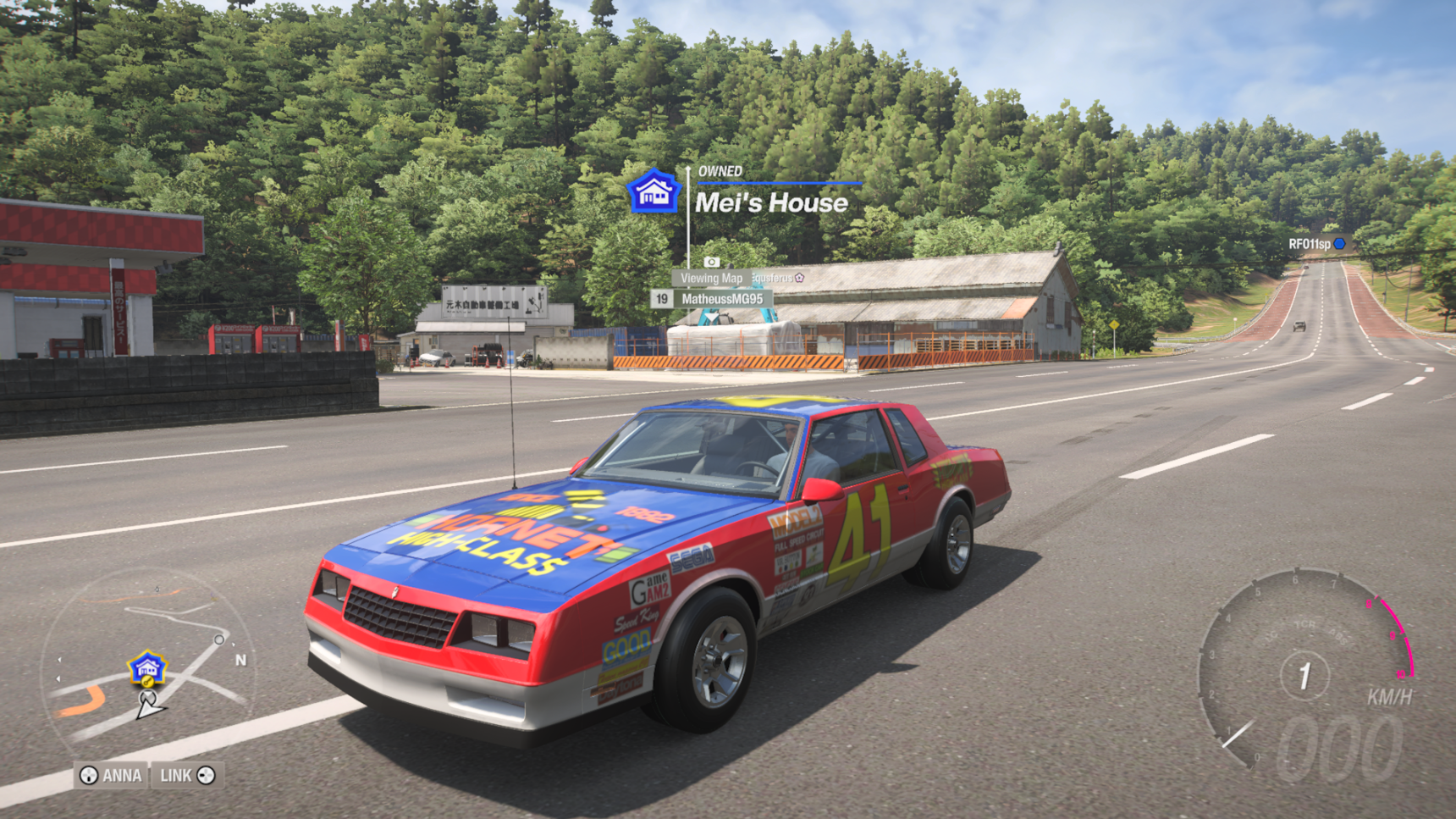
The final stage is testing. This is where many tuning attempts fail because players change five or six settings at once, drive one corner, decide the car feels different, and save the setup without knowing what actually improved it.
A much better method is controlled iteration. Choose a repeatable circuit, run several clean laps, change one variable, and test again. Current FH6 tuning resources repeatedly recommend this approach because vehicle characteristics differ substantially and fixed numbers are only starting points.
Use a structured testing loop
A useful process is:
- Save the original tune.
- Run three clean baseline laps.
- Record your best lap and the corners where you struggle.
- Change one setting.
- Run another three laps.
- Compare both lap time and driving feel.
- Keep the change only if it produces a meaningful improvement.
- Move to the next setting.
Do not judge a tune entirely from one corner. A setup that makes one hairpin faster can still make the rest of the circuit slower.
Build a diagnosis table
When testing, write down symptoms rather than vague impressions.
SymptomFirst area to investigateFront pushes while brakingBrake balance, entry techniqueFront pushes before throttleTires, alignment, ARBsFront pushes under accelerationDifferential, gearing, throttleRear suddenly rotatesRear ARB, differential, brake balanceCar feels unstable at high speedAero, damping, alignmentCar feels slow everywhereWeight, tires, gearing, power balanceExcellent cornering but poor straight speedAero and gearingFast lap but inconsistent behaviorSuspension balance and rear stability
The objective is to develop a repeatable tuning process. Once you can identify why the car is slow, you no longer need to copy someone else's setup blindly.
Conclusion
Fixing understeer in Forza Horizon 6 is not about finding one perfect suspension number or copying a popular tune. The real solution is understanding where the front tires lose authority and then addressing the problem in the correct order.
Start with the build itself. Give the car appropriate tires and enough mechanical grip before adding excessive horsepower. Then examine tire pressure, alignment, anti-roll bars, springs, braking behavior, differential settings, gearing, and finally aero. Each adjustment should have a specific purpose rather than being made simply because another tune uses the same value.
Most importantly, separate entry, mid-corner, and exit understeer. A car that pushes while braking needs a different solution from one that pushes only when you apply throttle. Once you learn to recognize those differences, tuning becomes much more predictable.
Forza Horizon 6's Japanese roads reward a car that can maintain momentum, brake confidently, rotate naturally, and put power down without forcing the driver into constant corrections. A balanced setup may not always have the highest horsepower number or the most aggressive suspension settings, but it can turn a difficult car into something that is considerably faster, easier to control, and more consistent from lap to lap.
110-character summary:
Build faster road-racing cars in Forza Horizon 6 by mastering grip, braking, suspension, gearing, and tuning.!