.webp) gametestedpro.com
gametestedpro.comScarlet Skips: One Button, Infinite Rhythm — How to Build a Run That Refuses to End

Scarlet Skips looks almost too simple to be a game you could spend hours playing. There is no complicated move list, no inventory to manage, and no giant skill tree waiting for you. You have a rope, a button, and one job: keep jumping.
Developed by Yerk Games and released on Steam in September 2026, Scarlet Skips turns jump rope into a one-button roguelike. Press, hold, and release control your movement, while successful runs gradually unlock random upgrade choices that can completely change the rhythm of the next jump.
That is where the real game begins. A taller jump changes your timing. Another rope gives you more to track. Fire changes the danger of the rope. Other upgrades can extend your time in the air. Because cards stack, the run you started with can eventually feel like a completely different game.
This Scarlet Skips tips and guides article focuses on one idea: don't try to beat the game by jumping harder. Learn how to build a rhythm that survives its own upgrades.
1. The First Skill Is Not Jumping — It's Reading the Rope
The biggest trap in Scarlet Skips is assuming that the one-button control scheme means the game is easy.
The controls are simple. The timing is not.
Steam describes the game as entirely based around press, hold, and release inputs from a single button. The challenge comes from learning how those three actions interact with the rope's movement.
Watch the rope before you watch the character
Your attention naturally wants to follow Scarlet.
That can be a mistake.
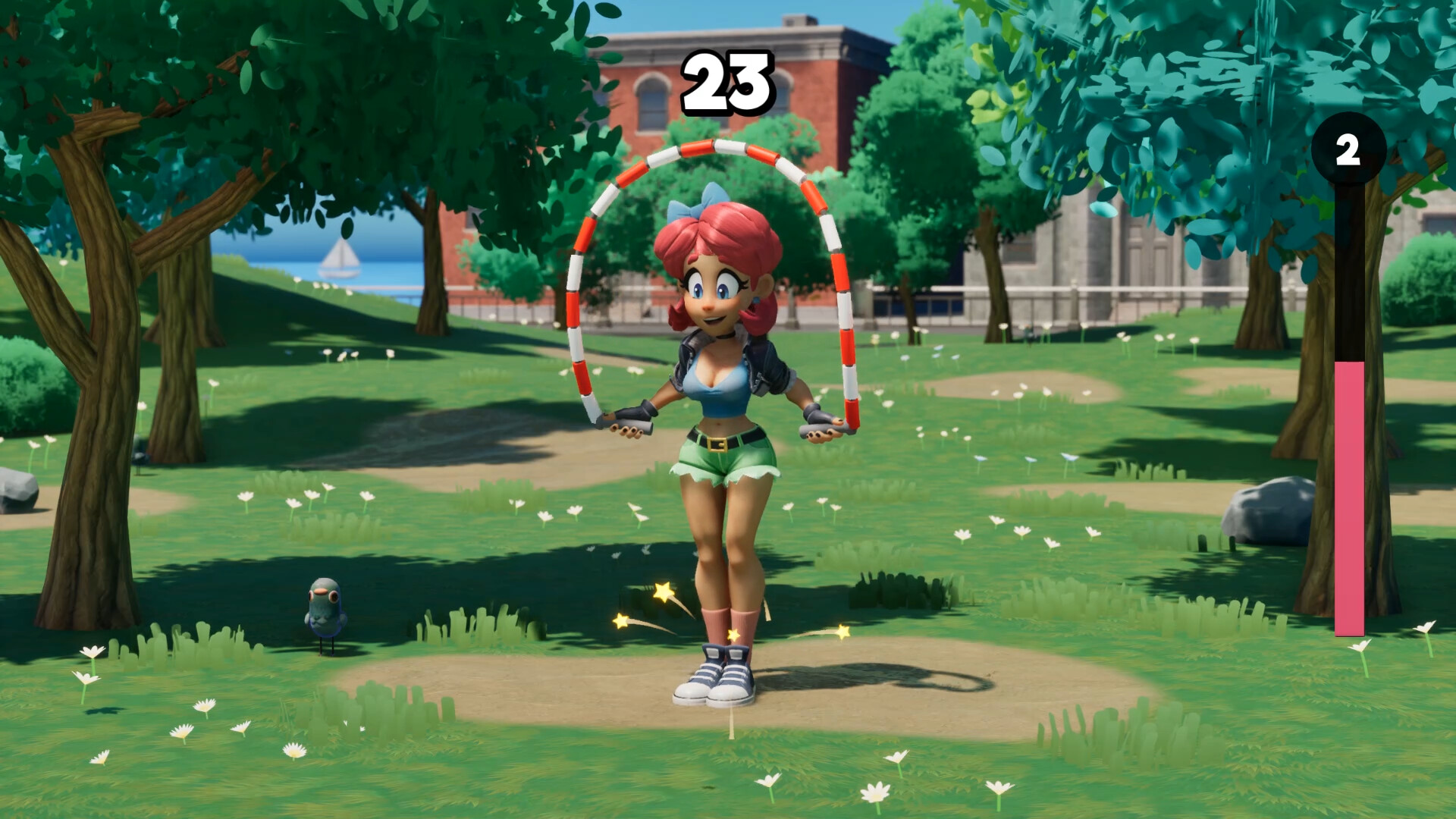
The rope is what determines whether your jump succeeds, so train yourself to read its position first. Before pressing the button, identify where the rope is and where it is going.
A useful rhythm is:
See the rope → Press → Hold → Read the next pass → Release
The goal is to stop reacting to Scarlet's movement and start predicting the rope's movement.
Repeat a small jump before experimenting
Early in a run, there is little reason to make your movement more complicated than necessary.
Practice a consistent jump.
You are trying to establish a baseline rhythm that you can recognize later when upgrades begin changing your airtime.
Once you know what a normal jump feels like, every upgrade becomes easier to understand because you have something to compare it against.
2. Think About Where You Will Land, Not Where You Are Jumping
A common beginner reaction is to press the button based on the rope's current position.
A better habit is to think one beat ahead.
Your jump is not really about getting off the ground. It is about returning to the ground at the correct moment.
The landing is the real decision
Whenever you take off, immediately start thinking about your landing window.
Ask:
- When will Scarlet come back down?
- Where will the rope be at that moment?
- Am I holding longer than necessary?
- Has my current jump changed because of an upgrade?
This becomes especially important when your jump height increases.
Height is not a free upgrade
Steam specifically lists increased jump height as one of Scarlet Skips' upgrade effects.
A taller jump can give you more clearance, but it also changes the timing you were already learning.
That means every major movement upgrade should trigger a brief reset:
New upgrade → New jump arc → New landing timing
Do not immediately assume that the old rhythm still applies.
3. Treat Every Level-Up Like a New Ruleset
Scarlet Skips uses a roguelike upgrade structure where level-ups present three random power-ups, selected from a pool of ten cards. Upgrades can stack, so what you choose early can influence how difficult the run becomes later.
This makes the upgrade screen more important than it first appears.
You are not simply choosing a reward.
You are choosing which version of Scarlet Skips you want to play for the next several minutes.
Ask what the card changes about your timing
Before picking a card, do not only ask:
“Is this powerful?”
Ask:
“What will this force me to do differently?”
For example:
- More jump height changes airtime.
- More ropes increase what you need to track.
- Faster rope movement reduces reaction time.
- Fire introduces additional risk.
- Air-based upgrades can keep Scarlet airborne for longer.
The stronger the effect, the more important it is to understand its impact on your rhythm.
Don't build from card strength alone
A powerful upgrade can still be a bad fit for your current run.
If your timing is already unstable, adding another source of visual or mechanical pressure may make the next section harder rather than easier.
Your build should therefore answer two questions:
What helps me survive now?
and
What gives me room to scale later?
4. Build a Rhythm Before You Build a Combo
The temptation in a roguelike is to chase synergy immediately.
Scarlet Skips rewards a slightly different mindset.
First create a stable run. Then make it complicated.
Start with one reliable movement pattern
Think of your first few upgrades as foundations.
Jump height is one of the officially advertised examples because it directly changes how Scarlet interacts with the rope.
Once that movement feels comfortable, you can begin adding more unusual effects.
This creates a simple progression:
Stable rhythm → More airtime → More complexity → More score potential
Trying to skip the first step often means your run collapses as soon as the game adds another variable.
One change at a time
Community beginner guidance recommends learning what each card changes instead of piling on multiple sources of pressure at once.
This is particularly useful for new players because it lets you identify exactly why your rhythm changed.
If you suddenly struggle after a level-up, think backward.
Did the jump get higher?
Did another rope appear?
Did the rope speed change?
Was there another effect layered onto the run?
Understanding that cause-and-effect relationship is more valuable than memorizing a fixed upgrade order.
![Scarlet Skips - Full (2 Billion) Playthrough [PC]](https://i.ytimg.com/vi/oBsqPaHdbw4/maxresdefault.jpg)
5. Extra Ropes Turn One Rhythm Into Several
One of the most interesting upgrades in Scarlet Skips is also one of the easiest to underestimate.
The official Steam description specifically mentions the ability to add another jump rope.
At first glance, it sounds like a simple difficulty increase.
In practice, it changes what you are watching.
Stop thinking about “the rope”
Once multiple ropes are active, your attention needs to expand from one object to a pattern.
Instead of asking:
“When does the rope arrive?”
you now need to think:
“What does the full rotation look like?”
Community guides and recorded runs show that additional ropes can stack, increasing the number of simultaneous patterns you need to track.
Don't add complexity just because you can
Extra ropes can make a developed run more interesting, but they are not necessarily the card you need while still learning basic timing.
A useful rule is:
If one rope still feels unpredictable, more ropes won't fix the problem.
Get comfortable with the base rhythm first.
Then start testing how much complexity you can handle without losing consistency.
6. Fire Is Where the Run Stops Feeling Safe
Scarlet Skips officially advertises an upgrade that can set a jump rope on fire.
That single mechanic captures what makes the game interesting: upgrades do not simply make the number on screen larger. They can change the relationship between risk and reward.
Think of fire as pressure, not decoration
A burning rope means your run has entered a different state.
Instead of simply maintaining a familiar rhythm, you are managing an additional threat while trying to preserve your progress.
Community sources describe fire as part of more aggressive scoring-oriented builds, particularly once a player already has a stable setup.
Don't turn every run into a score run immediately
There is a difference between surviving and maximizing.
A high-risk upgrade can make an established run more rewarding, but it can also punish you if your fundamentals are still inconsistent.
Try to earn the right to take risks.
Survival first. Score pressure second.
That mindset is much more useful than trying to force the flashiest build every time.
7. Rocket Shoes Change the Meaning of “A Jump”
Some upgrades do not simply modify the rope.
They modify Scarlet's time in the air.
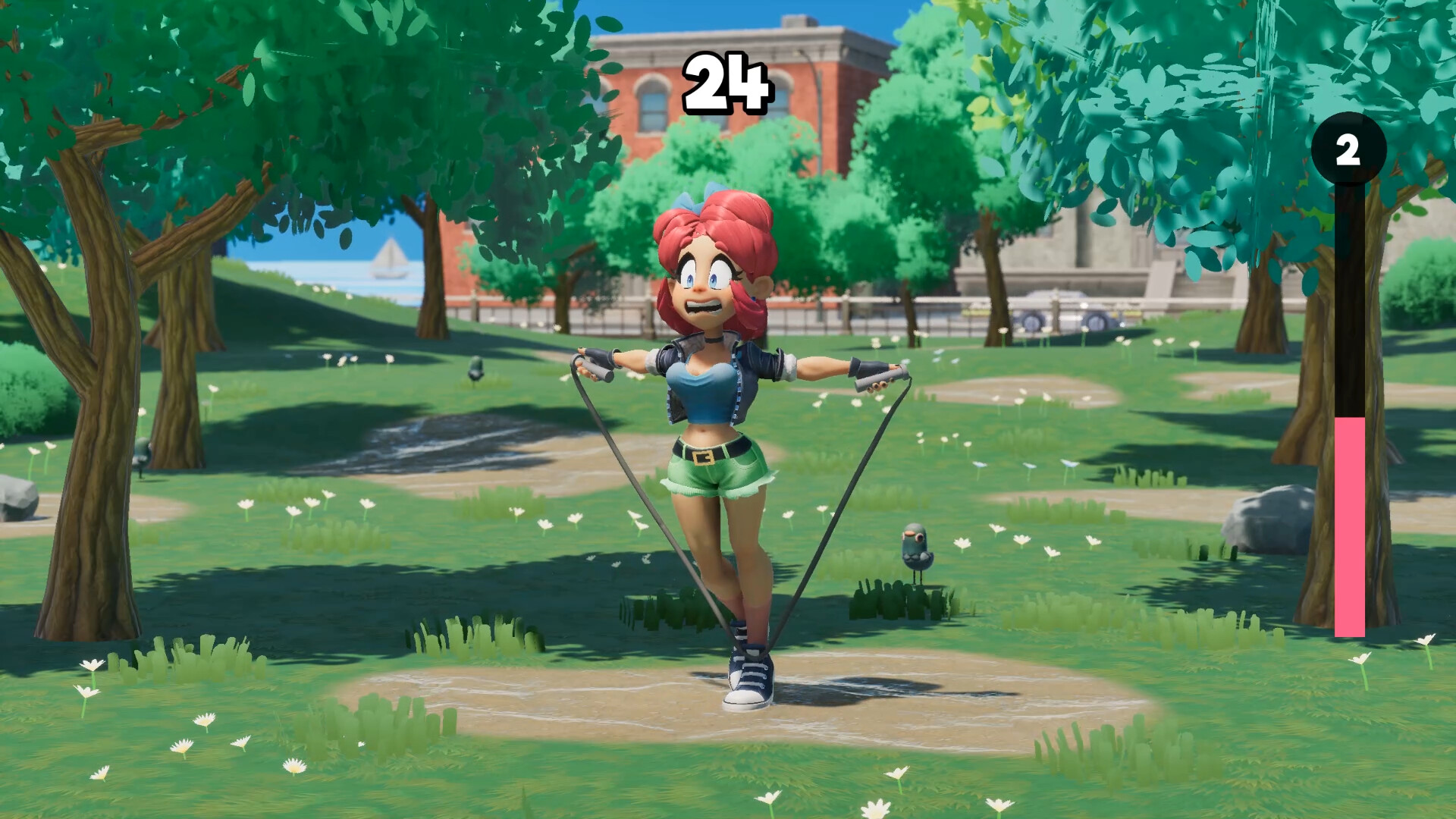
Rocket Shoes are referenced in the game's official 1.0.1 patch notes, which also mention fixes for Rocket Shoes and Extinguished Ropes. Community guides describe Rocket Shoes as an aerial extension that can keep Scarlet airborne for longer.
Airtime can become its own resource
Once you can remain in the air longer, your decisions become less about surviving one rope rotation and more about managing a sequence of rotations.
That changes the mental model:
Basic run:
Jump → Clear rope → Land → Repeat
Aerial run:
Jump → Stay airborne → Read several rotations → Control descent → Repeat
This is why aerial upgrades can feel dramatically different from simple height increases.
Don't take aerial upgrades before understanding your baseline
Community guidance suggests Rocket Shoes become more useful once a normal jump is already stable, because additional airtime has more value when you already understand how to control the base movement.
In other words:
Don't use an upgrade to avoid learning the timing.
Use the upgrade after you've learned it.
8. Learn to Pause Mentally When the Game Pauses Physically
Every level-up gives you a moment where the action stops and your next upgrade appears.
That pause is one of the few opportunities you have to think instead of react.
Use it.
Read the three cards before touching anything
Because the game presents three random choices, you should evaluate the complete screen before committing to one option.
Compare them based on:
- What your current build already does.
- What your timing currently feels like.
- Whether the card adds complexity.
- Whether the card strengthens an existing direction.
- Whether the card creates a problem you cannot currently handle.
The correct question is rarely:
“Which card sounds strongest?”
It is:
“Which card makes this particular run more coherent?”
Build around what you actually have
A fixed build order sounds attractive, but the random card system means every run can present a different set of choices.
That means adaptation is part of the game.
You may start with one idea and end up with something completely different.
That is not a failed build.
That is the roguelike part working as intended.

9. Stop Chasing the Score and Start Chasing Consistency
High scores are the obvious goal in Scarlet Skips.
But obsessing over the number can make your timing worse.
The counter is visible.
Your rhythm is not.
Measure progress by how calm your run feels
Ask yourself:
- Can I predict the next rope rotation?
- Do I know when to release?
- Can I recover after an unexpected upgrade?
- Can I read more than one rope?
- Can I maintain my rhythm without constantly reacting?
These are more useful indicators of improvement than one lucky run.
A player who can reproduce a strong rhythm repeatedly will naturally produce better scores over time.
Let bad runs teach you something
A failed run is useful when you know what ended it.
Was it:
Timing?
Overholding?
An upgrade that changed your rhythm?
Too much rope complexity?
A bad decision at the upgrade screen?
Treat each failure as a diagnosis rather than simply another restart.
10. Create Your Own “Forever Run” Formula
Scarlet Skips does not ask you to memorize dozens of systems.
It asks you to understand how a few systems interact.
One button controls the movement. Level-ups introduce random upgrades. The ten-card system lets those upgrades stack and progressively reshape the run.
That gives the game a surprisingly deep loop:
Jump → Survive → Level Up → Choose → Adapt → Stack → Repeat
The further you go, the less the game is about pressing a button and the more it becomes about maintaining a rhythm while the rules around that rhythm keep changing.
A practical long-run mindset
A strong session can follow this philosophy:
- Establish your basic timing first.
- Prioritize upgrades you can immediately understand.
- Relearn your landing after major height changes.
- Add complexity only after your rhythm is stable.
- Treat extra ropes as a pattern-recognition challenge.
- Save aggressive effects for runs you can already control.
- Use aerial upgrades to extend a stable rhythm rather than replace it.
- Read all three upgrade choices before making a decision.
- Build around the cards you actually receive.
- Learn from the exact reason each run ends.
The goal is not a perfect build
There may never be one universal way to play Scarlet Skips.
The random upgrade structure deliberately prevents every run from feeling identical, while stacked effects mean the same card can have a very different value depending on what you already picked.
Your strongest run is therefore not necessarily the one with the most impressive cards.
It is the one where your upgrades, timing, and decision-making all start working together.

Conclusion
The most useful Scarlet Skips tips are not complicated: learn to read the rope, understand your landing timing, and treat every upgrade as a change to the rules of your run.
The one-button control scheme makes Scarlet Skips easy to understand in seconds, but the roguelike upgrade system is what gives the game its depth. Jump height can reshape your timing, additional ropes create more patterns to track, fire introduces extra danger, and Rocket Shoes can completely change how you think about airtime.
The most important habit is to stop thinking of upgrades as isolated rewards. Each card becomes part of a growing system, and every new effect asks you to adapt to a slightly different version of the game.
Once you start approaching each run as a rhythm that you are building rather than a score that you are chasing, Scarlet Skips becomes much more interesting. The button may never change, but the decisions behind every press, hold, and release can keep changing all the way through the run.